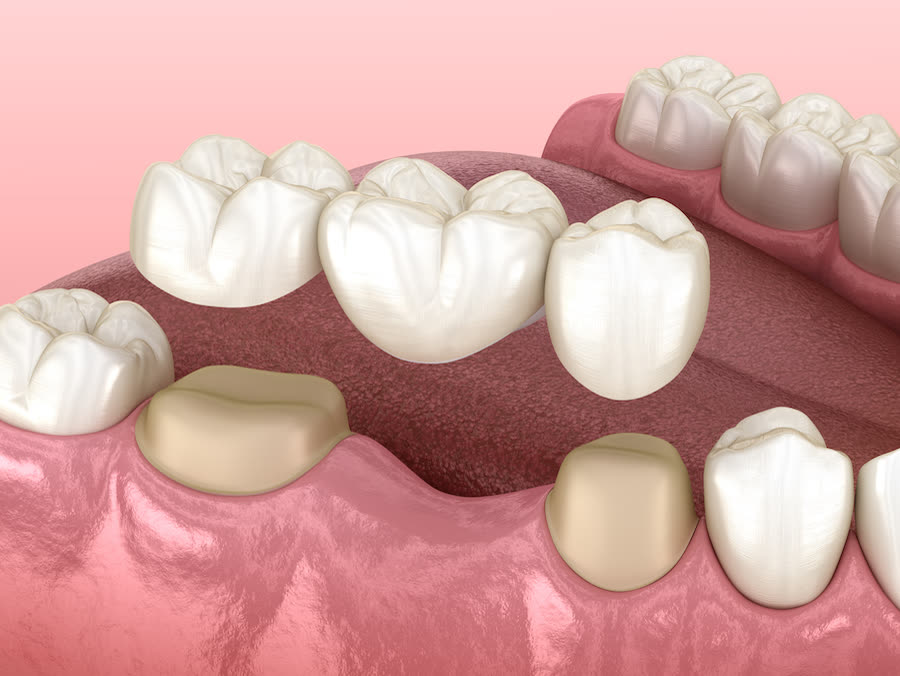
A crown caps and protects a tooth that's weak, cracked or heavily restored; a bridge fills the gap where a tooth is missing by anchoring to the teeth on either side. Together they restore both the strength and the appearance of a compromised smile.
Why quality crowns and bridges matter
A crown is one of the hardest-working restorations in the mouth — so the fit and the materials are everything. A poorly-fitting crown traps plaque at the margin and invites decay underneath; a well-made one seals cleanly, matches your natural teeth, and lasts for years. Choosing a fixed bridge over a gap also protects your bite: missing teeth let neighbours drift and the opposing tooth over-erupt, quietly changing how everything meets.
- Restores strength to cracked or heavily-filled teeth
- Fills gaps so your remaining teeth don't shift
- Colour-matched to blend with your natural smile
- Precise margins that protect against future decay
How we make sure it's done right
Longevity starts with preparation and impressions that are accurate to the detail. We work with quality dental laboratories and premium materials, match the shade to your own teeth, and check the fit and bite meticulously before anything is cemented. Nothing leaves the chair until it feels right, looks right, and functions the way a natural tooth should.
Common questions about crowns and bridges
What is the difference between a crown and a veneer?
A veneer covers the front surface of a tooth and is chosen for appearance. A crown covers the whole tooth and is chosen for strength — for teeth that are heavily filled, cracked, or have had root canal treatment. If the tooth is structurally sound and the issue is cosmetic, a veneer is the more conservative option.
How long do crowns last?
Ten to fifteen years is typical, and well-maintained crowns frequently exceed that. What ends a crown's life is usually decay creeping in at the margin where it meets the tooth, which is why the accuracy of the fit and your gum health matter more than the material itself.
How many visits does a crown take?
Normally two. The first prepares the tooth and takes the impression or scan, and you leave with a temporary crown. The second fits the finished crown once the laboratory has made it, with the shade and bite checked and adjusted before it is cemented.
Should I choose a bridge or an implant?
A bridge is faster and involves no surgery, but it requires the teeth on either side to be prepared to support it — healthy teeth are reshaped to carry the replacement. An implant leaves those neighbours untouched and preserves the underlying bone, at the cost of a longer timeline. Where the adjacent teeth already need crowns anyway, a bridge often makes better sense.
Will a crown look like my other teeth?
That is the standard we work to. Modern ceramics can be matched to the shade, translucency and surface character of the teeth around them. Front teeth are the hardest to match convincingly, and those are the cases where taking time over shade selection makes the difference.