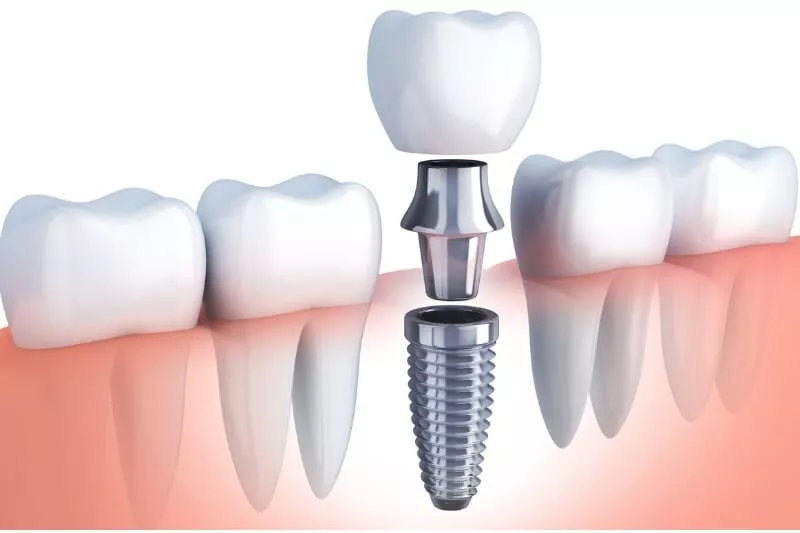
A dental implant replaces a missing tooth from the root up. A small titanium post is placed into the jaw to act as a new root, and a natural-looking crown is fixed on top — the closest thing modern dentistry has to giving you your tooth back.
Why implants over dentures or bridges
An implant stands on its own, so — unlike a bridge — it doesn't require grinding down the healthy teeth beside the gap. And unlike a removable denture, it's fixed, stable, and feels like part of you when you eat and speak. Just as importantly, the post stimulates the jawbone the way a natural root does, preventing the bone shrinkage and sunken look that follow long-term tooth loss.
- Looks, feels and functions like a natural tooth
- Preserves the jawbone and your facial shape
- Leaves the neighbouring healthy teeth untouched
- A long-lasting, stable solution with proper care
How we make sure it's done right
Implant success is built on planning. We assess the bone and plan placement with 3D imaging, use trusted, well-established implant systems, and place each implant under strict sterile conditions with a guided, precise technique. Healing is staged and monitored, and we stay with you through to the final crown and beyond — because an implant is an investment we want to see last.
Common questions about dental implants
How long does a dental implant take from start to finish?
Most cases run three to six months. The implant is placed, then left to integrate with the bone — that healing period is what takes the time, and it cannot be safely rushed. The final crown is fitted once integration is confirmed. Cases needing a bone graft or sinus lift take longer, and we will give you a realistic timeline for your own mouth at the planning stage.
Is getting an implant painful?
Placement is carried out under local anaesthetic, so you should not feel pain during the procedure. Most patients describe the days afterwards as milder than they expected — comparable to an extraction, and manageable with ordinary painkillers. Swelling and tenderness for a few days is normal.
How long do dental implants last?
The implant itself is designed to be permanent, and many stay in place for decades. The crown on top is the part that may need replacing eventually, much like any other restoration. The biggest threat to a long-lasting implant is gum disease around it, which is why we assess and treat your gum health before placing one.
Can I have an implant if I have lost bone in the jaw?
Often, yes. Bone loss is common after a tooth has been missing for a while, and grafting techniques can rebuild enough volume to support an implant. We plan this with 3D imaging rather than guesswork, so you will know before you start whether grafting is needed in your case.
Is an implant better than a bridge?
An implant replaces the missing tooth from the root up and leaves the neighbouring teeth untouched, which a bridge cannot do — a bridge relies on the teeth either side being prepared to carry it. Implants also preserve the bone that shrinks away once a tooth is lost. A bridge remains the better answer in some situations, and we will say so when it is.