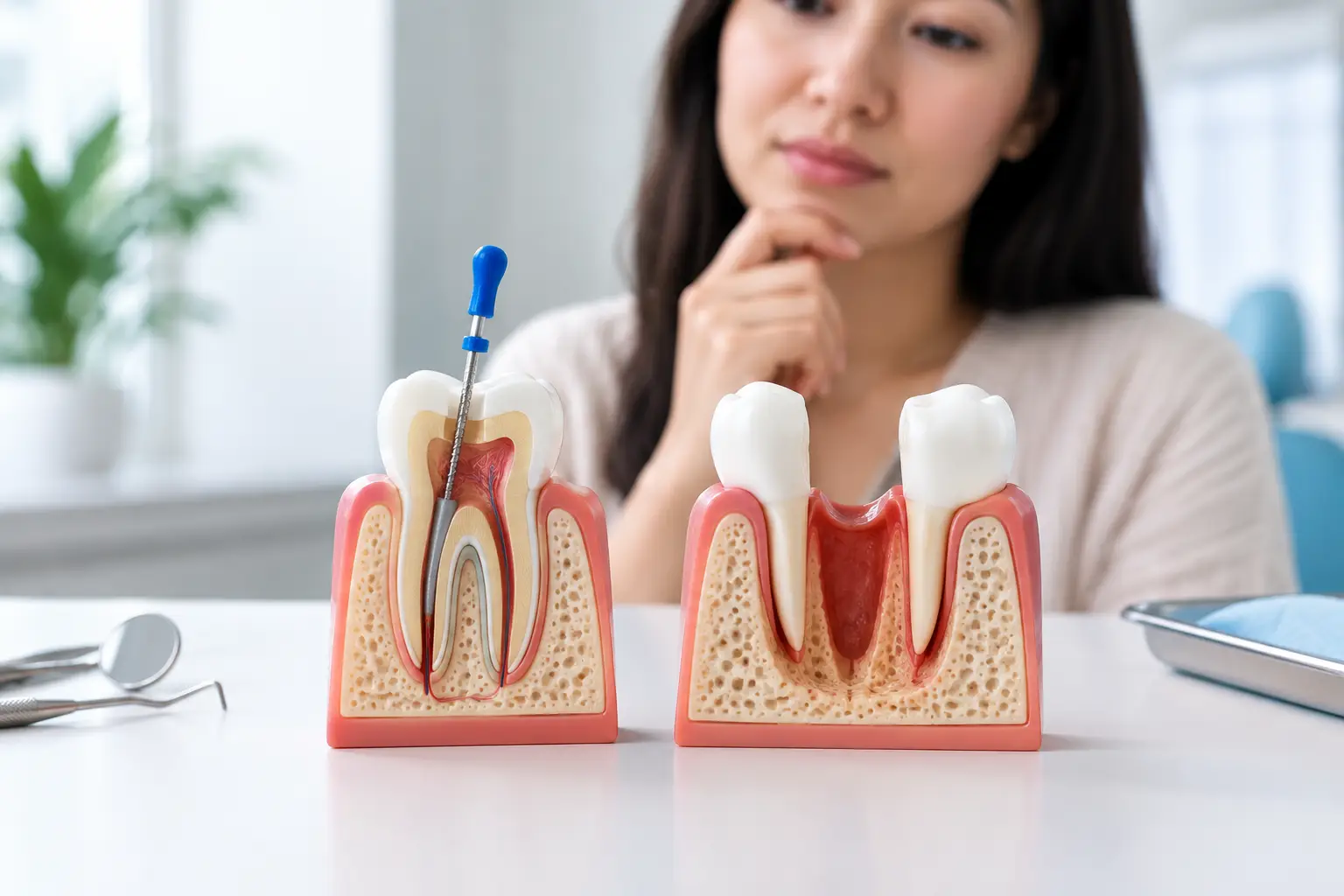
A painful tooth can make every meal, meeting and photograph feel like a negotiation. When a dentist raises root canal versus extraction, the decision is not simply about stopping pain. It is about preserving function, protecting the balance of your bite and making a considered choice for the appearance and future of your smile.
For many adults, saving a natural tooth is the preferred outcome when it is clinically predictable. Yet there are circumstances where removal is the healthier, more sensible path. The right answer depends on what remains of the tooth, the condition of the surrounding bone and gums, the source of infection, and the quality of the restoration that can follow.
Root canal versus extraction: the central difference
A root canal treatment removes infected or inflamed tissue from inside the tooth. The dentist carefully cleans and disinfects the root canals, fills them to prevent reinfection, then restores the tooth. For back teeth in particular, this restoration is often a custom crown that protects the remaining structure from fracture.
An extraction removes the tooth completely. It can bring rapid resolution when a tooth is too damaged, severely infected, split below the gum line or unable to support a reliable restoration. However, removing a tooth creates a space that may need further treatment, particularly in visible areas or where chewing forces are significant.
The key distinction is straightforward: root canal treatment aims to retain your natural tooth, while extraction trades that tooth for a future replacement plan, or occasionally an unfilled gap. Neither is automatically the superior treatment. The quality of the diagnosis matters more than a one-size-fits-all rule.
When saving the tooth makes sense
Root canal treatment is often recommended when infection has reached the dental pulp but the tooth still has enough healthy structure and sound root support. Deep decay, a large old filling, trauma and repeated dental work can all allow bacteria to enter the centre of a tooth. Symptoms may include lingering sensitivity to heat, pain on biting, swelling, or a small recurring pimple on the gum. Some infected teeth cause very little discomfort, which is why X-rays and clinical testing are so valuable.
Keeping a natural tooth has meaningful advantages. Its root continues to stimulate the jawbone, it retains the familiar feel and function of your own bite, and it avoids the need to replace a missing tooth immediately. When expertly restored, a root-treated tooth can serve for many years.
For a front tooth, preservation is often particularly valuable from an aesthetic perspective. The natural root helps maintain the contours of the gum and lip support. A well-designed crown can also recreate lifelike translucency, shape and colour while protecting the tooth underneath. This is where restorative planning becomes both technical and artistic: the goal is not only to eliminate infection, but to create a result that belongs naturally in the smile.
That said, root canal treatment is not a shortcut around structural problems. If most of the tooth has already been lost, if decay extends too far below the gum line, or if there is a deep vertical root fracture, a crown may not have a stable foundation. In those cases, attempting to save the tooth can mean spending time and money on a result with a guarded prognosis.
When extraction may be the better choice
Extraction is sometimes the most responsible recommendation, rather than the lesser option. A tooth may be beyond restoration because of extensive decay, advanced gum disease, severe bone loss, a fracture that extends into the root, or repeated infection after previous treatment. Wisdom teeth are also commonly removed when they are impacted, difficult to clean or damaging the tooth in front.
The important question is what happens after the tooth is removed. Leaving a gap can allow neighbouring teeth to drift and the opposing tooth to over-erupt. Over time, this can alter how the teeth meet, make cleaning less straightforward and affect smile symmetry. The jawbone in that area also tends to reduce in volume without the stimulation of a tooth root.
For many patients, a dental implant is the most complete replacement option following extraction. An implant replaces the root beneath the gum, then supports a carefully crafted crown above it. It can offer excellent stability, function and aesthetics without preparing the adjacent teeth. A bridge may be appropriate in other situations, especially when nearby teeth already require crowns. The best choice depends on bone volume, gum health, bite forces, timeline and personal priorities.
Extraction followed by an implant is not always faster than root canal treatment. Implant treatment commonly involves healing stages, and some cases need bone or gum preparation to create the right foundation. For patients planning a wedding, a major presentation or international travel, timing should be discussed early so that treatment can be designed around important dates rather than rushed towards them.
Comfort, recovery and the reality of treatment
Modern root canal treatment is performed with local anaesthetic, and many patients find it comparable to having a deep filling. The pain usually comes from the infection before treatment, not from the procedure itself. Mild tenderness for a few days can occur, particularly when the area was already inflamed.
An extraction is also carried out under local anaesthetic. Recovery can range from straightforward to more involved, depending on whether the tooth is easily removed or surgically extracted. Swelling, tenderness and temporary changes to eating are normal considerations. Smoking, poor blood sugar control and certain medical conditions can affect healing and should be shared with your dental team.
Neither option should be chosen solely because it sounds easier on the day. The more useful comparison is the full treatment journey: immediate comfort, number of visits, restoration needs, healing time and the long-term maintenance required to keep the result healthy.
Cost is a pathway, not just a procedure fee
An extraction can appear less expensive at first because it ends with removal. But if the space needs an implant and crown, bridge or removable replacement, the total investment can exceed the cost of saving the tooth. Conversely, root canal treatment plus a high-quality crown may not represent value if the tooth has a poor long-term outlook.
A clear treatment plan should separate the immediate procedure from the work needed to complete and protect the smile. Ask about the prognosis of the tooth, whether a crown is recommended, the expected lifespan of each option, and what future maintenance may involve. A lower initial fee is not necessarily the lower long-term cost.
Aesthetic planning matters, especially in the smile zone
When the affected tooth is visible, the decision has consequences beyond function. Root canal-treated front teeth can sometimes darken over time, although internal whitening and a thoughtfully made crown or veneer may be considered where appropriate. The aim is to match surrounding teeth in colour, proportion and surface character, rather than create one tooth that looks conspicuously different.
If extraction is necessary in the smile zone, preserving the gum and bone architecture becomes a priority. Careful extraction techniques, temporary tooth options and planned implant positioning can help support a natural-looking result. The final crown should be designed in relation to the whole smile, including gum levels, facial proportions and how the teeth appear when you speak and laugh.
At Damansara Dental Studio, this planning reflects the principle of Where Art Meets Science: a healthy solution should also respect the details that make a smile look unmistakably yours.
Questions worth asking at your consultation
A confident decision begins with a precise diagnosis. Ask whether the tooth is genuinely restorable, what evidence supports the recommendation, and what the likely outcome is in five to ten years. It is also reasonable to ask how the treatment will affect your bite and appearance, whether you need a crown or replacement tooth, and how the proposed timeline fits your commitments.
If you have swelling, fever, difficulty swallowing, facial spreading of infection or trouble breathing, seek urgent dental or medical assessment. These symptoms should not wait for a routine appointment.
A tooth does not need to be perfect to be worth saving, but it does need a realistic future. Choose the option that gives your oral health, confidence and smile the strongest foundation for the years ahead.