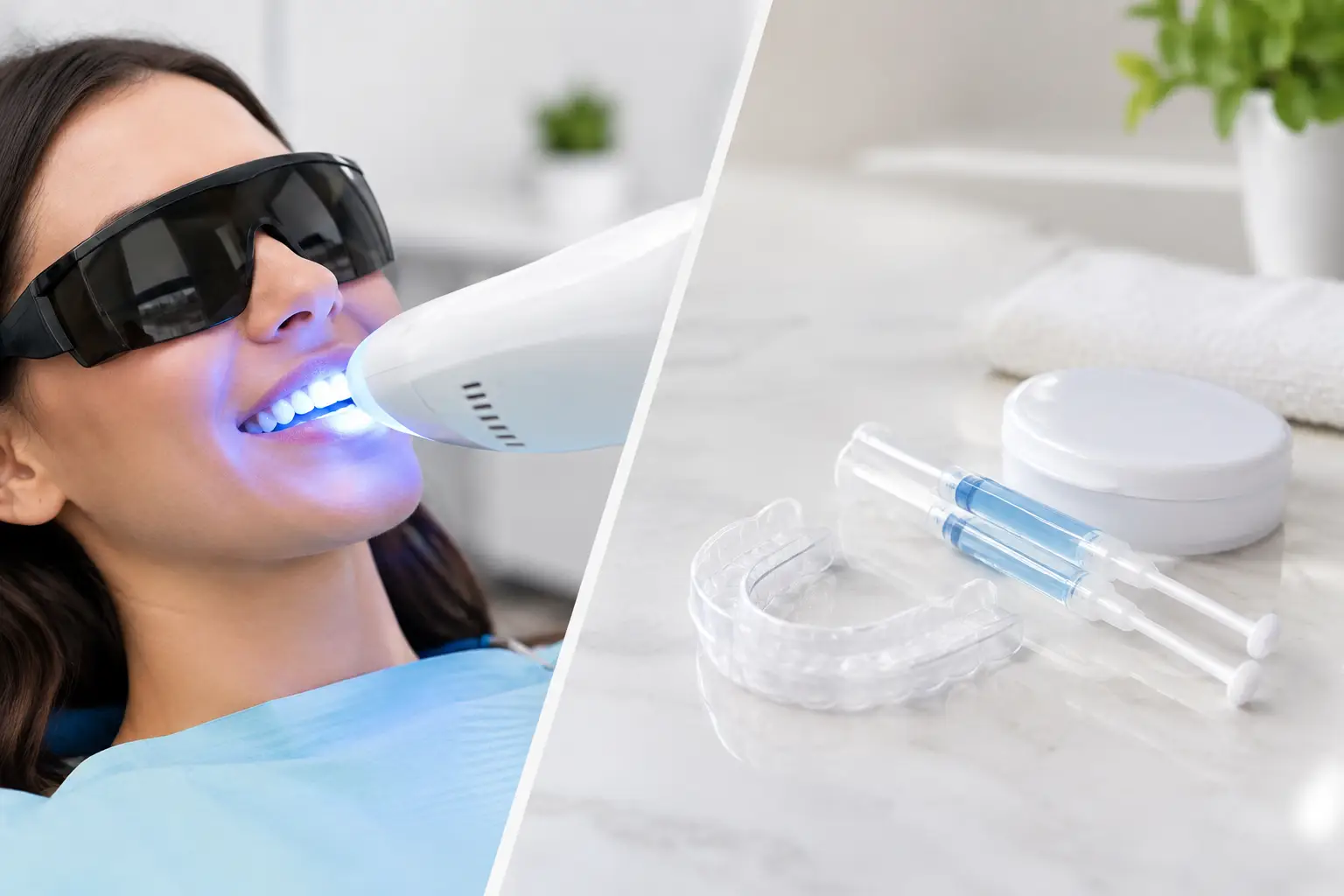
A brighter smile can change how a person is seen in a boardroom, in photographs and in everyday conversation. Yet the decision is not simply about choosing the strongest whitening option. When considering laser whitening versus home kits, the more useful question is: which approach suits your enamel, timeline, level of staining and expectations for the final shade?
For patients seeking a polished but natural-looking result, whitening should be treated as a personalised aesthetic treatment, not a one-size-fits-all purchase. The best option is the one that brightens your smile safely, comfortably and in proportion with your features.
Laser Whitening Versus Home Kits: The Core Difference
In-practice whitening, often called laser whitening or chairside whitening, is performed under professional supervision. A dentist first checks the teeth and gums, records the starting shade and protects the soft tissues before applying a professional-strength whitening gel. Depending on the system used, a light or laser may be used to activate or support the process. The whitening effect itself comes principally from the peroxide-based gel breaking down stain molecules within the tooth.
A home kit works more gradually. Over-the-counter versions usually contain lower concentrations of whitening ingredients and use generic strips, trays or pens. Professionally prescribed home whitening is different: it uses custom-made trays, a carefully selected gel and clear instructions from a dentist. This sits between a shop-bought kit and an in-practice session, offering a more controlled route to whitening over one to several weeks.
The distinction matters because whitening is not just about speed. It is also about how evenly the product contacts each tooth, how the gums are protected and how the treatment is adapted if sensitivity appears.
When Speed Matters Most
For a wedding, important presentation, television appearance or imminent holiday, chairside whitening is usually the more practical choice. A single appointment can create a visible change quickly, although the precise number of shades will vary. Deeply embedded staining, the natural colour of your dentine and your starting shade all influence the outcome.
This immediate result is appealing, but it should not be confused with a permanent change. Teeth can gradually pick up new stains from coffee, tea, red wine, tobacco and richly coloured foods. A well-planned whitening programme may therefore include home top-ups after chairside treatment to maintain the shade with less intensity.
Home kits reward patience. They can be especially suitable for someone who wants to brighten their smile discreetly before a future event and prefers small, progressive changes. With dentist-provided custom trays, patients can often pause, reduce wear time or adjust the schedule if their teeth become sensitive. That degree of control is harder to achieve with standard strips bought off the shelf.
Precision, Comfort and Safety
Professional oversight is the defining advantage of in-practice whitening. Before treatment, a dentist can identify concerns that a home kit cannot address, including decay, leaking fillings, gum inflammation, exposed root surfaces or enamel wear. Whitening gel may cause considerable discomfort if it enters a cavity or reaches vulnerable areas of the tooth.
In a chairside setting, the gums and lips are isolated before the gel is applied. The dentist can monitor the response of your teeth throughout the appointment and act promptly if sensitivity occurs. This is particularly valuable for patients who have previously experienced sharp sensitivity from whitening strips or who already know their teeth are reactive to cold.
That does not mean every home approach is unsafe. Dentist-supervised home whitening can be an excellent option when custom trays fit accurately and the gel is used as prescribed. The trays keep the whitening material close to the teeth and reduce unnecessary contact with the gums. By contrast, poorly fitting generic trays can allow gel to spill over, causing temporary gum irritation and uneven whitening.
Over-the-counter products may be appropriate for mild surface staining and modest expectations, but they offer less predictability. The concentration, tray fit and application technique are not tailored to your smile. A bargain kit is rarely a bargain if it leads to patchiness, sensitivity or an outcome that still leaves you booking professional treatment later.
The Result You Can Realistically Expect
The ideal cosmetic result is not necessarily the whitest shade available. Very bright teeth can look striking in photographs, but the most refined outcome should still complement your complexion, lip tone and facial character. At Damansara Dental Studio, whitening is approached as part of the wider smile picture - where art meets science means considering the harmony of the result, not simply the shade guide.
Chairside whitening is generally the more predictable choice for a noticeable improvement in a short time. It is particularly effective for common yellowing and dietary staining. However, grey-toned discolouration, staining caused by certain medications, trauma-related colour changes and naturally darker teeth can be more complex. These cases may need a staged approach, internal whitening for a non-vital tooth, or a different aesthetic treatment altogether.
Home whitening can produce an excellent result, especially with custom trays and professional gel, but it relies on consistent use. Skipping applications, overfilling trays or using the product for longer than advised can compromise comfort and results. It is a measured treatment, not a faster version of toothbrushing.
Neither method will whiten crowns, veneers, composite bonding or fillings. This is essential to understand before starting. If visible front teeth have restorations, the natural teeth may become lighter while the restorations remain their original shade. In some smile makeover plans, whitening is completed first so that new bonding, veneers or crowns can be colour-matched to the brighter teeth.
Which Option Is Right for You?
Laser whitening may suit you best if you want a professionally managed transformation before a defined occasion, have moderate to significant staining, or value the reassurance of treatment completed in one appointment. It is also a sensible starting point for patients with gum sensitivity, uneven staining or uncertainty about the cause of their tooth discolouration.
Dentist-supervised home whitening may be the better fit if you prefer a gradual result, want flexibility around your schedule, or would like custom trays for future maintenance. It can be particularly attractive for busy professionals who are happy to wear trays at home but still want clinical direction and a more tailored experience than a retail kit provides.
An over-the-counter kit can be reasonable for someone with healthy teeth, light surface staining and realistic expectations. It should not be used to disguise pain, darkening in one tooth, bleeding gums or a suspected dental problem. Whitening improves colour; it does not treat disease.
How to Make Your Brighter Shade Last
Whitening results fade at different rates because daily habits differ. The first 48 hours after a whitening session are often the period when patients are advised to be most mindful of strongly coloured food and drinks. After that, long-term maintenance is less about restriction and more about thoughtful routines.
Regular professional cleaning removes surface deposits before they become stubborn stains. Drinking tea, coffee or red wine with water alongside can reduce prolonged contact with pigments, while avoiding tobacco protects both tooth colour and gum health. If you have custom trays, occasional supervised top-ups can refresh your shade without repeating a full treatment course.
Sensitivity is usually temporary, but it should never be ignored. A dentist may recommend spacing out applications, using a sensitivity-focused toothpaste or changing the gel concentration. Forcing your way through discomfort does not produce a more beautiful result.
A whitening consultation is ultimately an opportunity to understand what your smile can achieve before choosing a method. The most confident result is not simply brighter teeth, but a healthy, even and natural-looking smile designed around you.